

af Magazine
~The Asahi Glass Foundation’s web magazine on the global environment~


Prevent Contamination Before It Happens: A Toxicologist Who Has Continued to Communicate the Risks of Persistent Chemicals to the World
What effects do chemicals that persist in the environment have on the human body? Dr. Linda S. Birnbaum, laureate of the 2026 Blue Planet Prize, has devoted her life's work to this question. She became the first woman to serve as Director of the U.S. National Institute of Environmental Health Sciences (NIEHS), bridged science and policy, and contributed to the creation of international regulations on persistent chemicals. "It is much easier to prevent contamination than it is to clean it up." Those words continue to be shared with the world today.
(Interview date: June 16, 2026)
Persistent Chemicals That "Insidiously Cause Serious Harm" as a Lifelong Research Theme

"Persistent chemicals such as dioxins, PCBs (polychlorinated biphenyls), PBDEs (polybrominated diphenyl ethers, a type of brominated flame retardant), and PFAS (per- and polyfluoroalkyl substances) affect human developmental systems, including the nervous system and endocrine systems. We have also come to understand that they contaminate the microbiome and can cause irreversible damage. That is why it is important to understand these pollutants and prevent damage before it occurs."
Dr. Linda S. Birnbaum, laureate of the 2026 Blue Planet Prize, speaks in this way. For many years, as one of the leading figures in toxicology in the United States, she has studied the effects of chemicals on human health that can persist in the environment and be taken up into the body: so-called persistent chemicals. Her work has not been limited to the United States. She has established the scientific evaluation of the risks of a number of substances and contributed to the development of international regulatory frameworks.
Dr. Birnbaum earned her Ph.D. in microbiology, where she conducted research on genetics and related subjects. She began working in earnest on persistent chemicals in 1979, when she took a position at the U.S. National Institute of Environmental Health Sciences (NIEHS).
"Among the dioxins (a collective term for highly toxic compounds, including TCDD and TCDF), I was studying at the time, TCDF had a structure very similar to TCDD, but was excreted from the body much faster and was less likely to remain in the body for long periods. Nevertheless, like TCDD, TCDF was also found to cause congenital abnormalities in mouse fetuses even at very low doses. At that moment, I realized that these substances could cause very serious harm to ecosystems and human health in ways that are not immediately apparent. This study became the starting point for my exploration of environmental toxicology."
Revealing the Risks of "Critical Windows of Susceptibility" and Challenging Conventional Wisdom in Toxicology
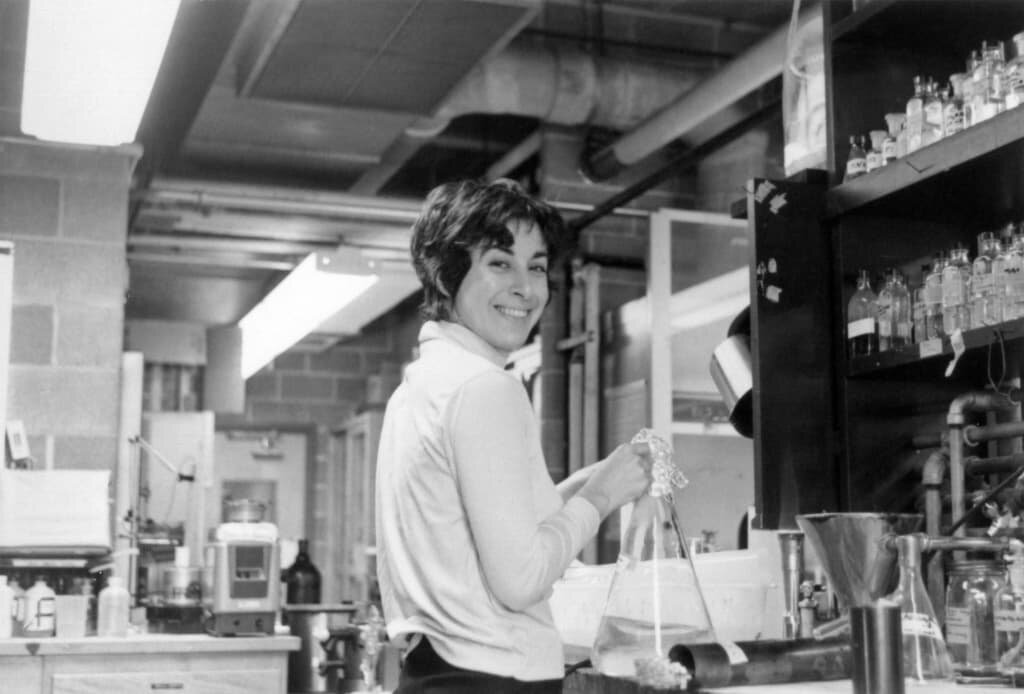
As Dr. Birnbaum studied the risks of dioxins, she arrived at a conclusion that would have a major impact on toxicology thereafter: the risk of chemical exposure is strongly affected not only by the "dose" but also by the "timing" of exposure.
"One breakthrough came from studies that identified the "critical windows of susceptibility" during which dioxins cause cleft palate and hydronephrosis (a functional disorder in which urine accumulates abnormally in the kidney) in mice. The fact that these windows were distinct demonstrated that development is governed by a highly choreographed series of biological processes.
At the same time, this study showed that conventional toxicity testing, often designed around exposure in "adults," may have overlooked effects during the most sensitive periods of development."
Ultimately, the work of Dr. Birnbaum and her colleagues changed the very way environmental health* would be understood. It shifted the field away from the idea of an "average safe exposure level over a lifetime" and toward a more nuanced understanding that "certain developmental stages, such as pregnancy and childhood, require stronger protection." This shift had broad effects on subsequent regulatory policy and public health guidelines, fundamentally changing how the risks of persistent chemicals are understood.
Dr. Birnbaum's research also supported the incorporation of Toxic Equivalency Factors (TEFs)—a method for quantifying the relative toxicity of related hazardous substances, with the toxicity of a reference substance set at 1—into dioxin risk assessment. Dioxins do not exist in the environment as single substances, but as mixtures of multiple substances. In addressing the question of how to evaluate the risk of the mixture as a whole, Dr. Birnbaum's experimental data were used as part of the scientific basis for the factors used to assess toxicity.
* Environmental health
A field that studies and addresses the effects of environmental chemicals, air pollution, water pollution, and other environmental factors on human health. Public health is a broader concept that refers to activities to protect the health of society as a whole, including infectious disease control, sanitation, and health promotion.
Environmental Pollution Hits Vulnerable People the Hardest: Toward Environmental Equity

After her achievements at NIEHS were highly recognized, Dr. Birnbaum joined the U.S. Environmental Protection Agency (EPA) in 1989 in a leadership position. Building on her earlier research on dioxins, she expanded her work to elucidate the health effects of environmental pollution in real-world settings. Her research interests became wide-ranging, including health risks among people living along the coast, arsenic in drinking water, childhood asthma, and the evaluation of asbestos contamination in Libby, Montana, a small town where mining had been active.
"Unfortunately, it is clear that the most vulnerable populations are the most exposed to environmental risks. They are like the canary in the coal mine, the ones who are affected by danger first."
Dr. Birnbaum has placed great importance on traveling to such communities herself and speaking with people directly. One example is her work with Indigenous communities in Alaska.
"Those who depend on fisheries for their livelihood suffer a range of health problems due to chemical contamination that accumulates downstream in rivers. Their situation clearly showed us the real-life dangers that chemical exposure can bring to our lives. Through field studies and research, I became increasingly convinced that we must pursue health equity."
This is the issue of environmental justice: the harm caused by environmental pollution falls disproportionately on people in socially vulnerable positions, including low-income groups, minority populations, and women. Throughout her career, Dr. Birnbaum has addressed this issue. She has connected scientific findings to policies and regulations and advanced rulemaking to protect people's health.
Then, after 19 years, Dr. Birnbaum was invited to return to her former institution. As the first woman to serve as Director of NIEHS, she entered a new stage of her career.
Breaking Gender Barriers by "Letting the Science Speak"

After becoming the first woman Director of NIEHS, Dr. Birnbaum oversaw the national research budget for the next 10 years, supported more than 1,000 research grants, and contributed to human resource development. She also contributed to the establishment of a framework and organization for evaluating non-cancer health effects of environmental chemicals on the human body.
Although Dr. Birnbaum was in a position to lead environmental health research in the United States, she also faced barriers because she was a woman.
"In every field, position, or role, women always face some kind of barrier. At home and in the workplace, they have to confront social assumptions about what is considered a "woman's role."
To be frank, I felt I had to be twice as good as men to get ahead. I could not take my work home with me. I was a wife and a mother. That is why I made it my duty to produce work of the highest standard in the workplace."
When she faced challenges, Dr. Birnbaum tried not to speak for herself, but to let the science speak. Through the results of her research, she steadily gained respect from the community.
Dr. Birnbaum also reflects that she was fortunate to have been able to fulfill her roles as wife, mother, and grandmother. What supported her was the presence of a wonderful and understanding husband, as well as wonderful mentors who gave her opportunities to take on challenges while also being flexible in helping her balance work and family.
"You may not be able to have everything all at once, but over time, you can have it all. That is what I want to tell women who will play active roles in the future. I feel that I was able to realize this by continuing to work hard, not missing opportunities, and being blessed with a supportive family and professional network."
There is something Dr. Birnbaum learned throughout her career: being a woman can be a barrier, but at the same time it can also be a strength.
"It means listening carefully to every voice, accepting people as they are, and recognizing what they can do. It means embracing diverse people while building relationships of trust. And it means continuing to learn. I believe these attitudes are important strengths not only for scientists, but for everyone."
Society Changes When Scientific Evidence Is Communicated with Integrity

Regulating persistent chemicals requires gaining the understanding of people in diverse positions, including industry and government. Dr. Birnbaum overcame not only barriers as a woman, but also barriers between people in different positions, guiding a number of persistent chemicals toward appropriate regulation.
Underlying these great achievements was Dr. Birnbaum's belief that "scientific integrity rests on the integrity of the researcher." Whether engaging with students, politicians, or industry, she always approached others with the same attitude. She communicated what was known as known, and frankly acknowledged what had not yet been clarified. She always provided evidence for her statements. That was her way of working.
"Data do not change depending on who is in the meeting room. Even if the facts are unwelcome, if carefully accumulated evidence is communicated candidly and thoughtfully, it will eventually lead to better policy and the protection of people's health. When people receive accurate information, they act. When those voices come together, they become a force that can change society."
Dr. Birnbaum says that there certainly were difficult times. Yet her own convictions and people's trust in science encouraged understanding and action among people in different positions. That attitude has also carried over into the issue of PFAS, to which Dr. Birnbaum has devoted considerable effort throughout the latter part of her career.
PFAS is a collective term for thousands to more than 10,000 chemicals that contain carbon-fluorine bonds. Because of their exceptional resistance to heat, water, and oil, they have been used widely in products such as nonstick cookware coatings, firefighting foams, and water- and stain-resistant products. However, some PFAS are extremely resistant to degradation and remain in the environment and the body for long periods. Dr. Birnbaum has consistently emphasized that comprehensively regulating PFAS as a "class" is the only scientifically sound and practical approach. At present, however, only a limited number of PFAS, including PFOA and PFOS, are subject to regulation in the United States and Japan.
"When scientists provide the public with accurate information about the toxicity of chemicals, people always respond. The growing rejection of products containing PFAS around the world reflects precisely this rise in awareness. Once people understand the risks, they choose safer alternatives. Companies, too, will respond to the voice of the public and the impact it has on their business, and change their products."
Six Messages from Dr. Birnbaum to the Next Generation
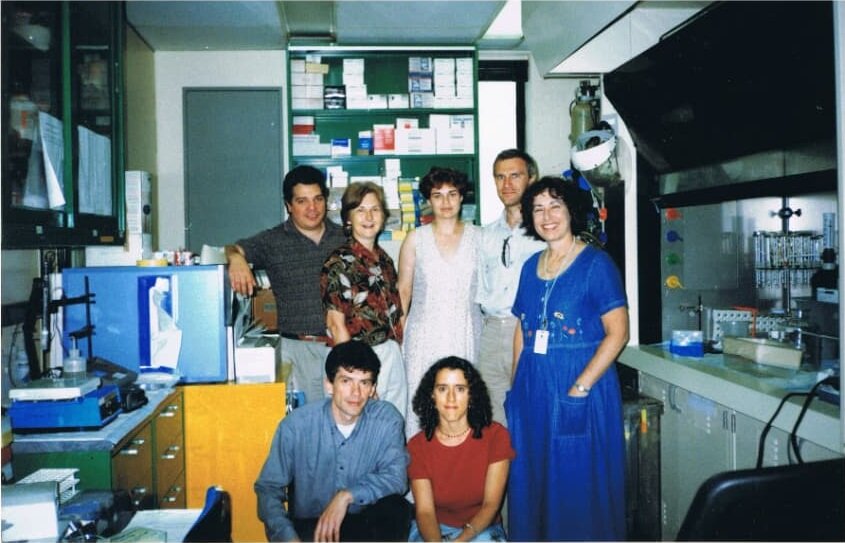
At the end of the interview, Dr. Birnbaum shared with Japanese readers, especially the young people who will carry the next generation, the ideas she has long valued.
"First, be aware of cumulative exposures. Synthetic chemicals such as PFAS can become a major risk when exposures accumulate, even if each individual exposure is small."
Next was a message to scientists.
"Science should not remain only within academic journals. We have a responsibility to share our research findings with the public and with policy makers."
Then she spoke about an attitude she has long held dear.
"The effects of chemicals are not uniform. We know that women and people in socially vulnerable positions are more greatly affected. Please continue working to change social structures in order to realize environmental and health equity. Fourth, when you face opposition or criticism, do not forget to be pragmatic, and do not stop asking difficult questions. Fifth, caring for the environment is shaping our future. Humanity and the environment are deeply intertwined."
And finally, Dr. Birnbaum, who for more than 40 years has studied chemical substances and continued to communicate scientific truth to society, closed with a smile:
"Keep working hard. Never stop learning. Find excellent mentors who will encourage you, and become such a person yourself. The world needs you."
Profile
Dr. Linda S. Birnbaum (USA)
Former Director, National Institute of Environmental Health Sciences (NIEHS);
Former Director, National Toxicology Program (NTP)
2026 Blue Planet Prize Laureate
Dr. Birnbaum led pioneering research on the toxicity of persistent organic pollutants (POPs), significantly advancing international risk assessment. By demonstrating how exposure to endocrine disruptors during "critical windows of susceptibility"—such as fetal development—can shape long-term health, she strengthened the scientific basis for protecting vulnerable populations. As Director of both the National Institute of Environmental Health Sciences (NIEHS) and the National Toxicology Program (NTP), she bridged science and policy, translating research into tangible public health improvements.